



Legal Advice to Club Atlético River Plate on the US$ 100,000,000 Loan for the Expansion and Roofing of the Mâs Monumental Stadium

Our Banking, Infrastructure, and Corporate teams advised Club Atlético River Plate Asociación Civil (CARP), as borrower, in connection with a syndicated loan in an aggregate amount of US$ 100,000,000.
The loan structure comprises: (i) a loan from IDB Invest for up to US$ 50 million; and (ii) a loan from CAF for up to US$ 50 million. The co-financing scheme between CAF and IDB Invest reflects both institutions’ commitment to jointly mobilizing resources in order to strengthen infrastructure across the region.
With respect to IDB Invest, the loan proceeds will be used: (i) to refinance bridge financing used for the construction of the new school building and Casa River (the youth residence and development center); and (ii) to finance the construction of improvements to the stadium, including, among others, extending the useful life of the facility, improving its acoustics, increasing capacity to 100,000 spectators and installing a partial roof to enhance the fan experience.
As for CAF, its resources are directed mainly to the stadium’s roof component. By acting as thermal insulation, the roof will reduce direct solar radiation on the facility and, as a result, the energy demand of the climate control system, improving the venue’s energy efficiency and reducing its consumption.
With more than 350,000 members, CARP is one of the sports clubs with the largest membership worldwide, and is widely recognized for its professional football department. The Club offers 20 federated sports, organizes recreational activities for the community and runs its own school with more than 1,700 students per year, spanning from early childhood through higher education and combining academic excellence with sports training.
The loan is backed by a complex security package, comprising the fiduciary assignment of various collection flows and rights of the Club.
In connection with the transaction, our Infrastructure team advised CARP on the principal agreements governing the execution of the project. The team advised the Club throughout the competitive tender process to select the contractor, including the preparation and review of the bidding documents pursuant to which leading local and international construction firms participated in the tender, as well as on the subsequent EPC (engineering, procurement and construction) agreement entered into with Grupo ENG S.A., the selected bidder, for the execution of the stadium’s expansion and roofing works. The team also advised CARP on the technical supervision agreement entered into with SBP (Schlaich Bergermann Partner), a leading German engineering firm renowned for its design and supervision of large-scale structures, including the roofs of Tottenham Hotspur Stadium and the Santiago Bernabéu Stadium.

Legal Advice in the Issuance by Banco CMF S.A. of Class 20 Notes for US$ 22.029.901
Counsel to Banco CMF S.A., as issuer and placement agent, in connection with the issuance of US$22,029,901 Class 20 notes, denominated and payable in U.S. dollars in Argentina, to be paid in cash in U.S. dollars in Argentina and/or in kind through the delivery of Class 19 notes, at a 4.00% fixed annual nominal interest rate (the "Notes"). The Notes were issued on August 24, 2026 under the Global Program for the Issuance of Simple Notes (not convertible into shares) for a maximum aggregate outstanding principal amount of US$100,000,000 (or its equivalent in other currencies and/or units of value or measurement) and are due on August 24, 2027.
Issuance of the Class III, Class IV and Class V Notes of Banco de la Provincia de Córdoba S.A. under its Program
Legal counsel to Banco de la Provincia de Córdoba S.A. in the issuance of its Class III Notes, in an aggregate principal amount of ARS 11,000,000,000, denominated and payable in Argentine pesos, to be paid in cash in pesos and/or in kind through the delivery of Class I Notes, bearing interest at the TAMAR rate plus a margin of 2.5%, maturing on August 10, 2027; issued its Class IV Notes, in an aggregate principal amount of USD 20,000,000, denominated and payable in U.S. dollars, to be paid in cash in U.S. dollars and/or in kind through the delivery of Class II Notes, bearing interest at a fixed rate of 5.95% nominal annual, maturing on August 10, 2029; and issued its Class V Notes, in an aggregate principal amount of UVA 34,387,337, denominated in UVA and payable in pesos at the applicable UVA value, to be paid in cash in pesos at the initial UVA value and/or in kind through the delivery of Class I Notes, bearing interest at a rate of 6.75% nominal annual, maturing on August 10, 2028 (together, the “Notes”), under its program for the issuance of simple notes (not convertible into shares) for up to an aggregate principal amount of USD 100,000,000 (one hundred million U.S. dollars) (or its equivalent in other currencies or units of measurement or value).
Banco de la Provincia de Córdoba S.A. acted as issuer, arranger, settlement agent and Lead Placement Agent, and Becerra Bursátil S.A., SyC Inversiones S.A., Banco Santander Argentina S.A., Banco de Galicia y Buenos Aires S.A., Macro Securities S.A.U., Puente Hnos. S.A., Balanz Capital Valores S.A.U., Cocos Capital S.A., Invertir Online S.A.U., Allaria S.A., Banco de Servicios y Transacciones S.A.U., Banco Patagonia S.A. and Facimex Valores S.A. acted as placement agents.
Legal Advice in IEB Construcciones S.A.’s Notes Issuance





Legal advisors to IEB Construcciones S.A. and the Placement Agents in connection with the issuance of Class I simple negotiable obligations for a total nominal value of US$ 20,000,000 (twenty million US Dollars), denominated, subscribed and payable in US Dollars, at a fixed annual rate of 6.5%, maturing on August 10, 2027.
Invertir en Bolsa S.A. acted as Arranger and Placement Agent. Meanwhile, PP Inversiones S.A., Bull Market Brokers S.A., SBS Trading S.A., Win Securities S.A., S&C Inversiones S.A., Argentina Valores S.A. and INVIU S.A.U. acted as Placement Agents.
US$120 Million Loan to the City of Córdoba


We advised the City of Córdoba, as borrower, and the Province of Córdoba, as guarantor, in connection with a US$120 million financing provided by private lenders. The transaction was arranged by Deutsche Bank AG, with TMF Group New York LLC acting as administrative agent.
Public tender for “AMBA I” transmission expansion work as a Public Works Concession
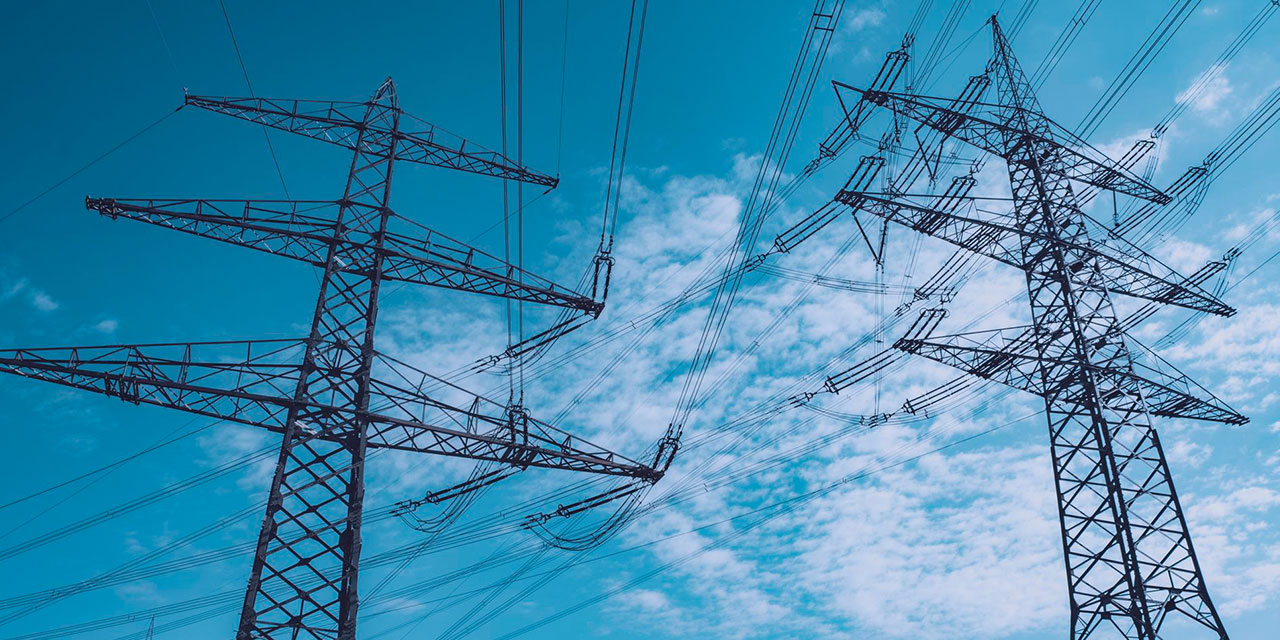
On August 12th, 2026, the Secretary of Energy (the “Tender Authority”) published Resolution No. 202/2026 (“Resolution 202”), launching National and International Multi-Stage Public Tender No. 34-0003-LPU26 (the “Tender”) for the execution of “AMBA I” high-voltage transmission expansion work (the “Work”) under the “Expansions through Public Works Concessions (Law No. 17,520)” regulatory framework. The Work had previously been declared a priority expansion by Resolution No. 715/2025 of the Ministry of Economy, ratified by Decree No. 921/2025 (see our comments here, here and here).
Resolution 202 also approves the General Bidding Terms, the Specific Bidding Terms, the Technical Specifications, the Public Works Concession Agreement template (the “Concession Agreement”) and their annexes (“Tender Documents”). It also creates the Bid Evaluation Committee and provides that the Tender will be conducted through the CONTRAT.AR platform.
Resolution 202 is a milestone for the Argentine Interconnection System ("SADI", for its acronym in Spanish) and for the Argentine electricity market as a whole, launching the process to carry out the transmission works considered essential to significantly improve the conditions for supplying demand in Greater Buenos Aires, as well as the security and reliability of the area and of the SADI in general, while promoting private investment in the electricity sector under conditions of legal robustness strongly oriented towards bankability.
The main terms of the Tender Documents are summarized below:
1. Main Tender Terms
(i) Scope and Schedule
The Tender covers the construction, operation and maintenance of the Works, divided into two (2) concurrent stages. Bids are due on December 8, 2026, at 11:00 a.m., with opening at 12:00 p.m.; questions to the Tender Documents may be submitted until November 8, 2026.
(ii) Eligibility
Bidders must meet the legal, technical and financial requirements and submit a US$40 million bid guarantee valid for at least one hundred and eighty (180) days.
(iii) Economic offer and RIGI
Bidders must submit an economic offer, which comprises: (i) the total remuneration sought for the entire remuneration period (the “Total Remuneration”); (ii) the investment reference value; (iii) economic and financial indicators to be provided by the Tender Authority.
The selected bidder may apply to adhere to the Large Investments Incentive Regime (“RIGI”, for its acronym in Spanish). If rejected or withdrawn, it may still execute the Concession Agreement on the same terms, or decline, allowing the next-ranked bidder to be called. Bidders must consider the impact of RIGI on the economic offer.
(iv) IDB Guarantee
The Tender Authority also informs that the Inter-American Development Bank (“IDB”) is considering a potential guarantee for the Concession Agreement, covering up to six (6) months of remuneration for up to twenty-five (25) years, subject to its internal approvals (see the IDB report, here).
2. Main Terms of the Concession Agreement
The Concession Agreement must be entered into by the Ministry of Economy, represented by the Secretary of Energy, and the selected bidder (the “Concessionaire”). The Concession Agreement comprises two (2) periods: (i) Construction; and (ii) Operation and Maintenance. The Concessionaire will receive a monthly remuneration based on the Total Remuneration for the construction activities, to be paid through a rate charged to the beneficiary users (the “Concession Rate”). Following commercial operation, the Concessionaire will act as an Independent Transmission Carrier under the Technical License and Connection Agreement with the transmission carriers TRANSENER and TRANSBA to operate and maintain the Work, receiving a rate regulated by the regulatory body (the “ITC Rate”).
The main terms of the Concession Agreement are summarized below:
- Works Structure: The Works comprise two (2) stages that may be executed in parallel, which, in turn, are composed of lots. Completing each lot triggers Total Remuneration for the relevant stage, while delays may reduce the remuneration period and the Total Remuneration.
- Total Remuneration: CAMMESA (Argentina’s ISO) will pay the Concessionaire for up to seven (7) years for each stage, with transmission-service payment priority. Total Remuneration will be adjusted based on the U.S. PPI.
- Financial Contribution: The Concessionaire may receive up to US$55 million from the Wholesale Electricity Market Stabilization Fund through CAMMESA, subject to contractual milestones and a guarantee.
- Equipment: CAMMESA may provide equipment and related services to the Concessionaire for the Works.
- Guarantees: The Concessionaire must post (i) an execution guarantee equal to 10% of the Total Remuneration, which may be reduced by 65% upon completion of Stage 1, and (ii) an O&M guarantee equal to 2.5% of the Total Remuneration upon expiry of the execution guarantee.
- Financial Equilibrium: Adverse changes entitle the Concessionaire to renegotiation to restore the Concession Agreement’s financial equilibrium, including remuneration adjustments, term extensions or changes to the Works.
- Dispute Resolution: Unresolved disputes may be referred to a Technical Panel and, subsequently, to an international arbitration under the ICC Rules.
- Secured Creditors: Certain actions require the secured creditors’ prior consent. Upon termination due to the Concessionaire’s default, they may exercise step-in rights and appoint a qualified successor meeting the same legal, technical and financial requirements as the Concessionaire.
***
For additional information, please contact Nicolás Eliaschev, Javier Constanzó, Daiana Perrone, Milagros Piñeiro, Macarena Becerra Martínez, María Paz Albar Díaz, Victoria Barrueco, Manuel Crespi, Sol Villegas Leiva, Nair Ivanoff Ravnensky, María Emilia Río, Fermín Bartos, and/or Felicitas Orb.
María de los Ángeles Olano joins our Firm as Partner in the Tax Practice

We are pleased to announce the appointment of María de los Ángeles Olano as Partner in our Tax practice. The appointment strengthens our Firm's tax offering with one of Argentina's most highly regarded tax lawyers, recognised for advising domestic and international clients on sophisticated tax matters, transactions and disputes.
Olano brings over 20 years of experience in tax law, focusing on domestic and international tax advisory work for local and multinational companies, as well as tax controversy and litigation. Throughout her career, she has advised clients on sophisticated transactions, including mergers and acquisitions, share transfers, domestic and international tax planning, digital economy matters, initial public offerings (IPOs), trusts, tax-free reorganisations, investment structuring, project finance, estate planning, tax due diligence and debt restructurings, among other strategic matters.
Since 2018, Ángeles has been consistently recognised by leading international legal directories, including Chambers Latin America, The Legal 500, Leaders League and Lexology Index, where she is ranked among Argentina's leading tax practitioners.
Prior to joining Tavarone Rovelli Salim Miani, Ángeles spent more than 18 years in Beccar Varela's Tax Department, where she advised local and multinational clients on domestic and international tax matters. She also led complex tax controversies before administrative authorities and the courts, while developing strategic solutions for complex tax matters. Earlier in her career, she was a member of the tax teams at Cárdenas, Di Ció, Romero, Tarsitano & Lucero and Bomchil.
Commenting on the appointment, Gastón Miani, Partner and Head of the Tax and Corporate Criminal Law practices, said:
“Ángeles is an outstanding addition to our Tax practice. Her extensive experience advising both domestic and multinational companies, together with her exceptional track record in complex tax controversy matters before both administrative authorities and the courts, further enhances our ability to help clients navigate an increasingly sophisticated and demanding tax environment.”
Olano graduated with honours from the University of Buenos Aires School of Law, where she also completed a postgraduate programme in Tax Law. She further completed the Intensive Programme on International Taxation in Latin America at Universidad Torcuato Di Tella.
She is also actively involved in academia and professional organisations. Since 2024, she has served as Secretary of the Board of Directors of the Argentine Association of Fiscal Studies (AAEF) and as Secretary of the Argentine Branch of the International Fiscal Association (IFA). She has spoken at international conferences organised by leading organisations including the American Bar Association (ABA), the International Bar Association (IBA) and the International Fiscal Association (IFA). She also served as National Reporter at the IFA Peru 2022 Congress on the implementation of BEPS Action 4 in Latin America and is the author of numerous publications on tax law.
Marcelo Tavarone, Managing Partner and Head of the Banking & Capital Markets practice, added:
“Welcoming a lawyer of Ángeles' high profile reflects our commitment to building first-class teams across all our strategic practice areas. Her appointment further strengthens the comprehensive service we provide to clients and reflects our long-term commitment to the Firm’s continuing growth. It also reinforces our determination to keep expanding to create new opportunities for both our clients and our people. Once again, when we say that we are ready to stay in line with this new time of opportunities in Argentina, we really mean business.”
Ángeles commented:
“I am delighted to join Tavarone Rovelli Salim Miani, a Firm with a distinctive professional identity and an outstanding team. This new opportunity allows me to continue developing my tax practice alongside professionals with whom I share common values and a long-term vision of client service.”
Olano's appointment as Partner reinforces our commitment to excellence and to the continued growth of our Firms's strategic practice areas, further consolidating our Tax practice as a leading adviser to domestic and international clients.
***
Media Contacts:
Paula Cafferata, paula.cafferata@tavarone,com
Sofía Quesada, sofia.quesada@tavarone.com
MSU Green Energy reopens its Class 4 Senior Secured Notes with a US$130,000,000 Additional Issuance in the International Market

Our team advised Santander US Capital Markets LLC, in its capacity as international initial purchaser, and Banco Santander Argentina S.A., in its capacity as local placement agent, in connection with the reopening of the Class 4 Senior Secured Notes issued by MSU Green Energy S.A. (“MSU Green Energy” or the “Issuer”, as applicable), through the issuance of additional Class 4 Notes in an aggregate principal amount of US$130,000,000 (the “Additional Class 4 Notes” or the “Notes”, as applicable), which constitute a single class with, and are fungible with, the Class 4 Notes originally issued in an aggregate principal amount of US$400,000,000 (the “Original Class 4 Notes” and, together with the Additional Class 4 Notes, the “Class 4 Notes”).
The Additional Class 4 Notes are denominated and payable in U.S. dollars outside Argentina, bear interest at a fixed rate of 9.750% per annum and mature on June 16, 2036. The principal amount will be amortized in three annual installments equal to 33%, 33% and 34% of the principal amount of the Class 4 Notes, payable in 2034, 2035 and 2036, respectively.
The transaction consisted of an international offering to qualified institutional buyers in the United States pursuant to Rule 144A under the U.S. Securities Act of 1933, as amended, and to investors outside the United States pursuant to Regulation S, complemented by a primary public offering in Argentina exclusively to qualified investors under the rules of the Comisión Nacional de Valores (the “CNV”), while secondary trading of the Notes in Argentina may be conducted with the general public in accordance with the CNV Rules.
The Notes were offered through an internationally recognized book-building process led by Santander US Capital Markets LLC, in accordance with the offering documentation. Pricing of the Notes took place on August 6, 2026, and the issue and settlement date was August 10, 2026.
In addition, DEG – Deutsche Investitions- und Entwicklungsgesellschaft mbH, a wholly owned subsidiary of KfW Germany, and Development Finance Institute Canada (DFIC) Inc. (FinDev) participated in the transaction as Development Finance Institutions (“DFIs”). Both institutions entered into separate investment agreements with the Issuer and confirmed their intention to acquire, collectively, between US$40,000,000 and US$50,000,000 in aggregate principal amount of the Notes, subject to the final allocation determined by the Issuer.
The Additional Class 4 Notes are secured, on a pari passu and pro rata basis, by the same collateral package granted in favor of the holders of the Original Class 4 Notes. Such collateral package includes a security assignment in trust over certain receivables and revenues arising from the Issuer’s power purchase agreements, granted in favor of TMF Trust Company (Argentina) S.A., in its capacity as collateral trustee, as well as additional security interests over certain receivables of Chocón Hidroeléctrica Argentina S.A. and future Restricted Subsidiaries, in each case in accordance with the terms of the offering documentation.
The Class 4 Notes also qualify as Green Bonds and were issued under MSU Green Energy’s Green Financing Framework, which is aligned with the Green Bond Principles of the International Capital Market Association (ICMA), the applicable CNV guidelines and the guidelines of Bolsas y Mercados Argentinos S.A. (BYMA). In this context, Sustainable Fitch issued a Second-Party Opinion concluding that such framework demonstrates “Excellent” alignment with the applicable international standards, supporting the eligibility of the Class 4 Notes as Green Bonds.
Citibank, N.A. acted as trustee, registrar, paying agent and transfer agent for the Notes; TMF Trust Company (Argentina) S.A. acted as collateral trustee; and the Branch of Citibank, N.A. established in the Republic of Argentina acted as representative of the International Trustee.
This reopening represents an expansion of the financing obtained by MSU Green Energy in the international capital markets and further strengthens the company’s access to international sources of financing for the development of its energy projects, including projects aligned with sustainability criteria.
Our Firm's team was led by partner Francisco Molina Portela, together with associates Juan Carenzo, Juan Pablo Reinoso and Melina Dirakis. We also advised TMF Trust Company (Argentina) S.A., in its capacity as collateral trustee, through partner Julieta De Ruggiero and associate Agustina Culetto.
Syndicated Loan to MSU S.A. for US$60,000,000


Counsel to Banco de Galicia y Buenos Aires S.A., as lender, administrative agent and collateral agent, and Banco de la Nación Argentina, Banco de la Provincia de Buenos Aires and Banco de la Ciudad de Buenos Aires, as lenders, in connection with a syndicated loan to MSU S.A. for an aggregate principal amount of US$60,000,000.
The loan is secured by a first-priority pledge over the shares held by Inversiones Agroganaderas S.A.U. and MSU S.A. in Oro Esperanza Agro S.A., as well as by two first-priority mortgages over a peanut processing plant and a rural property located in the Province of Santa Fe.
Legal Advice in the Issuance by Central Puerto S.A. of Series E Notes for US$98,897,303



Counsel to Balanz Capital Valores S.A.U., Banco de Galicia y Buenos Aires S.A., Allaria S.A., Banco BBVA Argentina S.A., Banco Santander Argentina S.A., Cocos Capital S.A., SBS Trading S.A., one618 Financial Services S.A.U., Max Capital S.A., Banco de Valores S.A. and Les Cinq Capital S.A., as placement agents, in connection with the issuance by Central Puerto S.A. of US$98,897,303 Series E notes, denominated and payable in U.S. dollars at a 5.50% fixed annual nominal interest rate (the “Notes”). The Notes were issued on July 27, 2026 under the global program of simple notes (not convertible into shares) for up to US$1,000,000,000 (one billion United States Dollars) (or its equivalent in other currencies and/or units of value or measurement) and are due on July 27, 2029.
Legal advice was provided by partner Francisco Molina Portela and associates Juan Cruz Carenzo, Bárbara Valente and Agustina Culetto.