



New Regulation for Natural Gas Distribution Projects
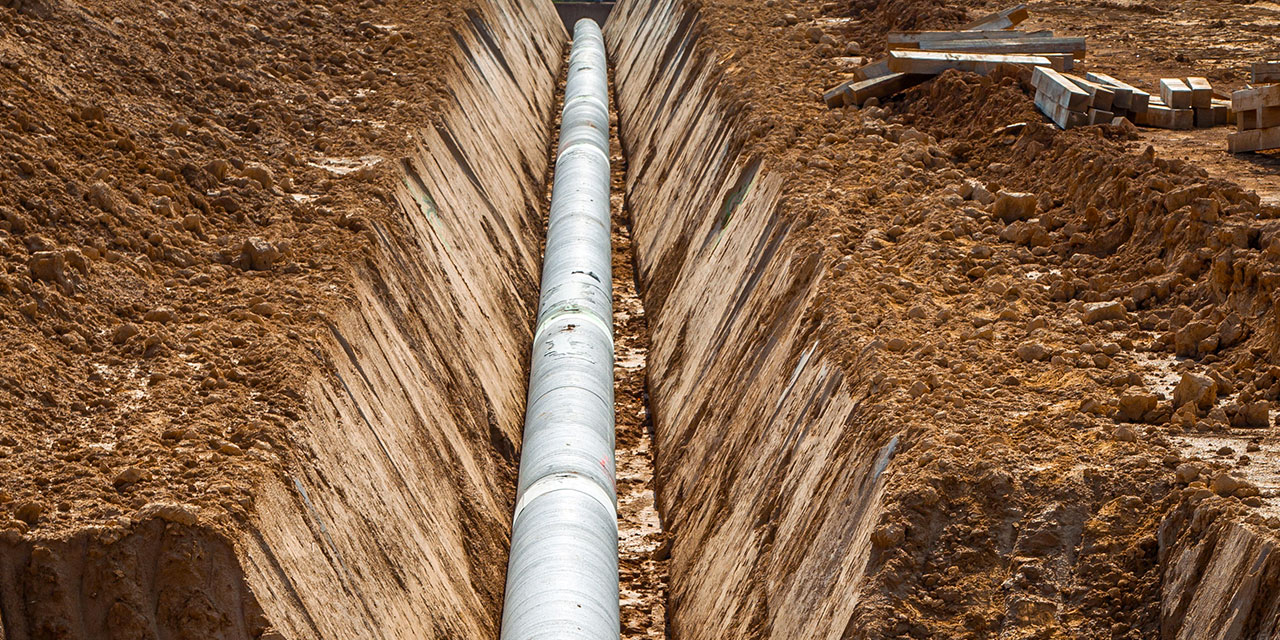
On April 27, 2026, the National Gas Regulatory Authority (“ENARGAS”, by its acronym in Spanish) issued Resolution No. 435/2026 (“Resolution 435”), approving a new regulatory framework for authorizations under section 16 of Law No. 24.076 –referred to the construction of large-scale works carried out by gas transportation and distribution companies– (the “Rules”). In this regard, Resolution 435 supersedes the previous rules, issued by the ENARGAS through Resolution No. I 910/2009 (“Resolution 910”).
The main changes introduced by the Rules are as follows:
Resolution 435 enables the use of an ENARGAS web-based application for the submission of authorization and submission forms within the project approval process. The same system will be used for uploading technical information that must subsequently be notified to ENARGAS.
The Rules classify projects as “Large‑scale” or “Non‑Large‑scale”. The latter category expands the range of projects exempt from prior authorization, maintaining the general structure of the previous framework, by including isolated facilities within the system, such as pressure‑reducing plants, metering stations, odorization facilities and scraper traps. It also extends to thirty (30) calendar days the deadline for distribution companies to respond to requests from sub‑distributors or third parties regarding their priority to carry out the construction, as well as the operation and maintenance, of the project.
Moreover, Resolution 435: (i) introduces the contracting party as a financing party, (ii) requires increased transparency regarding economic viability, and (iii) replaces the previous scheme with a new digital system.
Another change introduced by Resolution 435 relates to the time limit for notifying ENARGAS of the suspension or halt of projects. The Rules do not establish a specific deadline; instead, they require the distribution company to inform ENARGAS of the project’s status and the reasons underlying such situation. At the same time, the Rules grant ENARGAS the authority to revoke project authorizations where (i) the project has not been initiated by the authorized entity, (ii) any delays have not been duly justified, and (iii) a third party expresses interest in continuing the project.
The Rules maintain the obligation to preserve the compensation granted to the contributing user until it is fully exhausted, while extending the period for the incorporation of new beneficiaries from two (2) to ten (10) years.
Sub-Annex I of the Rules introduces new requirements applicable to authorization requests, including the submission of a supply feasibility confirmation by the transporter/distributor and authorization to connect to its systems, together with information on gas availability for the project. It also reduces the project evaluation horizon from thirty-five (35) to ten (10) years, thereby modifying a key parameter of the economic analysis.
The criteria for justifying contributions in non-viable projects remain in effect, as set forth in Resolution 910, but now include additional procedural requirements. Sub-Annex V of the Rules introduces a mandatory web-based application, replacing the individual cash flow models. It also replaces the use of average costs derived from tariff margins with actual marginal costs based on affidavits submitted in accordance with Resolution No. 1976/2000.
Lastly, applications submitted prior to the entry into force of Resolution 435 will continue to be governed by the rules set forth in Resolution 910 and its complementary regulations.
***
For more information, please contact Nicolás Eliaschev, Javier Constanzó, Milagros Piñeiro, and/or Fermín Bartos.

Privatization of Belgrano Cargas y Logística S.A.: Provisions Applicable to the Sale of Rolling Stock
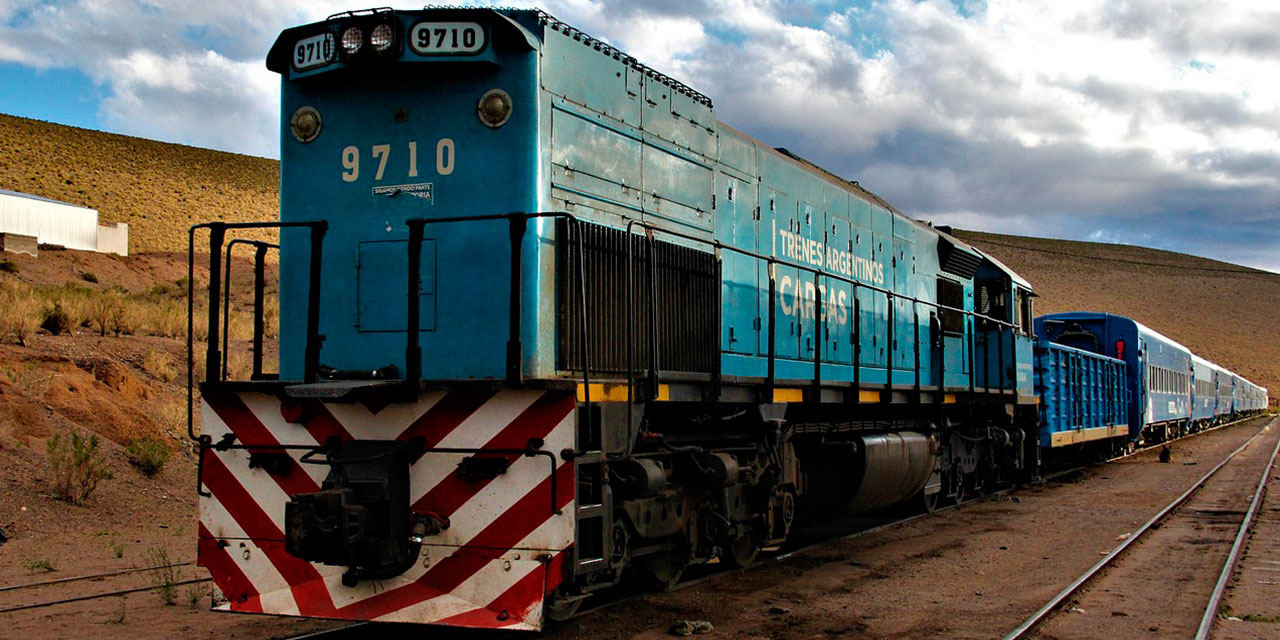
On April 28, 2026, in connection with the privatization of Belgrano Cargas y Logística S.A. (“BCyL”), which was initiated by Resolution No. 1049/2025 (“Resolution 1049”) of the Ministry of Economy, pursuant to the authorization granted by Decree No. 67/2025 (See our comments here), the National Executive Branch issued Decree No. 282/2026 (“Decree 282”)
Decree 282 establishes that resources obtained from the sale of the rolling stock included in the concession process of the railway lines and adjacent real estate of General Belgrano, General San Martín and General Urquiza Lines (“Lines”), shall be assigned to the Transport Infrastructure System Trust Fund (“Trust”)
In this regard, the Ministry of Economy was instructed to allocate the relevant proceeds to the Trust account opened under Resolution 1049, execute any necessary amendments to the trust agreement, and issue any supplementary implementing rules. It was also entrusted with determining the sale price of the rolling stock, which may not be lower than the valuation issued by the National Valuation Tribunal in connection with the BCyL privatization process.
Decree 282 also instructed the Secretariat of Transport to identify the rolling stock to be included in the track concession processes for the Lines, in accordance with the applicable tender documents.
***
For additional information, please contact Nicolás Eliaschev, Javier Constanzó, Juan Pablo Bove, Paula Cerizola, Macarena Becerra, Cristian Bruno, Manuel Crespi, Nair Ivanoff Ravnensky, and/or Fermín Bartos.
New Regulation on Expansions of Power Transmission System Capacity through Public Works Concessions
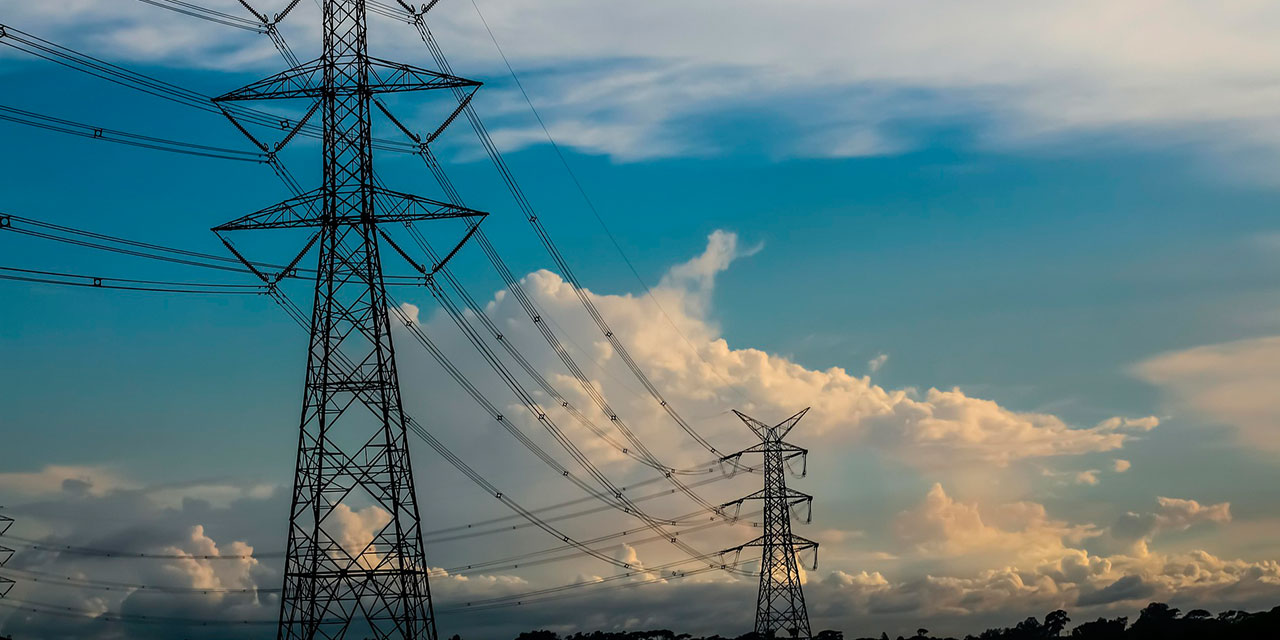
On April 7, 2026, the Secretary of Energy published Resolution No. 83/2026, which incorporates a new section into the expansions of power transmission regulatory framework “Expansions through Public Works Concessions (Law No. 17,520)” pursuant to the provisions of Resolution No. 715/2025 of the Ministry of Economy (“Resolution 715”) and Resolution No. 311/2025 of the Secretary of Energy (“Resolution 311”) (see our comments on these regulations here and here).
Expansions to be carried out under the regime of the Public Works Concessions Law No. 17,520 (the “PWC Expansions”) are aimed at enabling transmission works that are essential to mitigate the risks associated with supply constraints in the Argentinean Interconnection System and to promote private investment.
The new mechanism shall be implemented by successful bidders under public tenders called by the Secretary of Energy, who shall enter into public works concession agreements (the “PWC Agreements”) and act as concessionaires.
Concessionaires remuneration shall be paid directly by the dispatching authority and includes: (i) a monthly remuneration to recover the investment, which may be funded through tariffs charged to WEM users identified as beneficiaries of the relevant expansion and is awarded the same priority level as existing high-voltage transmission service providers under the WEM regulations (i.e. highest priority payment within the WEM payment waterfall); and (ii) an operation and maintenance rate, determined by the regulatory body, once commercial operation of the relevant expansion is achieved.
The next step for the transmission expansion plan is the call for the public tenders envisaged for the works identified in Resolution 311: “AMBA I”, “500 kV Río Diamante – Charlone – O’Higgins Line” and “500 kV Puerto Madryn – Choele Choel – Bahía Blanca Line”.
***
For further information, please contact Nicolás Eliaschev, Javier Constanzó, Daiana Perrone, Milagros Piñeiro, Macarena Becerra Martínez, Rocío Valdez, Victoria Barrueco, Sol Villegas Leiva, María Paz Albar Díaz, Manuel Crespi, Nair Ivanoff Ravnensky and/or Fermín Bartos.
Call for bids for the concession of the Paraná-Paraguay Waterway
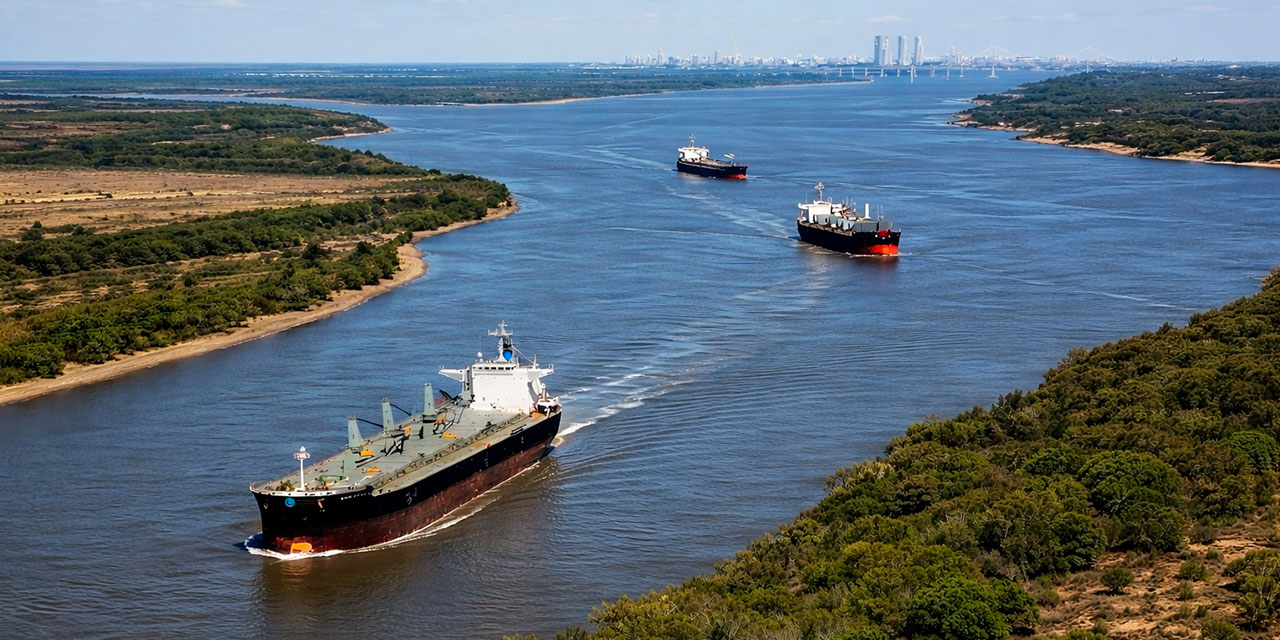
In 2021, Decree 949/2020 empowered the Ministry of Transport to call for and award the tender for the public works concession for the modernization, expansion operation and maintenance of the signaling system and dredging and redredging tasks (the “Tender” and the “Concession”, respectively) of the waterway between kilometer 1238 of the Paraná River and the Natural Deep Water Zone in the outer Río de la Plata (the “Waterway”).
Subsequently, given the imminent expiration of the awarded concession contract, the General Port Administration S.E. took over the Concession for a 12-month period, which was extended until a new concessionaire was awarded. Provision 34/2024 of the Ports and Waterways Subsecretary called for a public tender for the selection of the new concessionaire, but it was cancelled after receiving only one bid.
In this context, after a public hearing and the submission of comments by the interested parties, Resolution 67/2025 (“Resolution 67”) of the Argentinean Ports and Waterways Agency (“ANP” for its Spanish acronym) called for a new Tender and approved its general terms and conditions and technical specifications (the “Tender Documents”).
The most relevant aspects of the call are detailed below:
1. Tender Schedule
- Deadline for submitting questions regarding the Tender Documents: January 28, 2026, at 11:59 p.m.
- Deadline for submitting bids: February 27, 2026, at 1:00 p.m.
- Opening of Envelope No. 1: February 27, 2026, 1:00 p.m.
2. General Conditions of the Tender
The Tender is a multi-stage tender, which requires bidders to submit their bids in three envelopes: the first for documentation proving compliance with the legal requirements, the second for the technical memorandum and a works plan, and the third for the financial bid, which must include the pricing sheet for Stages 0, 1 and 2.
3. Submission of Bids
Bids must be submitted exclusively through the Contrat.Ar platform, for which interested parties must be previously registered in the category “State Co-contractors,” subcategory “Concessionaire Law No. 17.520” in accordance with Provision 84/2024 of the National Contracting Office and Resolution 35/2024 of the Deputy Executive Chief of Staff.
4. Participation and Special Requirements
As a condition to participate, bidders must be legal entities, either domestic or foreign, with the power to enter into legal obligations in Argentina. These entities may participate individually or in associations, but cannot choose both options or participate in more than one.
Legal entities directly or indirectly controlled by sovereign states or state agencies, as well as temporary joint ventures, among others, are excluded from the Tender.
If awarded, bidders must establish a special purpose vehicle with an equal or greater term than the Concession’s maximum. In addition, it must prohibit any change in ownership that affects its control.
5. Economic Requirements
Bidders must prove compliance of the following financial requirements:
- Total net assets greater than US$ 300,000,000;
- Minimum turnover greater than US$ 450,000,000, in all respects;
- Solvency factor greater than 1.40;
- Liquidity factor greater than 0.9;
- Debt ratio less than 2.5; and
- An average annual turnover from dredging activities greater than US$ 300,000,000 and minimum profitability of US$ 30,000,000 for all activities.
6. Experience Requirements
Bidders must have experience in dredging works in ports and channels for the improvement and maintenance of navigation conditions, conducted with their own equipment, which must exceed a volume of 1,000,000 m3 of removed materials. These works must have been made in waterways that allow the navigation of vessels with a depth of more than 8 m.
Only records dating from after 2016 will be taken into account. In the case of associations, only the records of the member with a share of forty percent (40%) or more will be considered.
In particular, bidders are required:
- Total dredging volume of not less than 15,000,000 m3;
- Monthly dredging volume exceeding 500,000 m3, excluding backfilling or filling, with own equipment with a draft of less than 8.5 m;
- Experience in the implementation or maintenance of signaling systems;
- To have six suction dredgers built after 1994, with a maximum draft of 8.5 m and an installed onboard power of no less than 4,000 kW. In addition, the combined hopper capacity of four of the dredgers must not be less than 20,000 m3.
- Emissions rating and ISO 9001, 14001, and 45001 certifications.
Bidders must appoint a technical representative, who will represent the Concessionaire before the National Executive Branch and the ANP (the “Issuing Authority”) and receive service orders. This person must be a civil or port engineer and must demonstrate experience in positions related to the organization, management, inspection, and/or technical representation of dredging works in Argentina.
7. Technical Memorandum
Bidders must submit a technical report and a work plan indicating the tasks to be performed, the volumes to be removed, and the dredgers to be used in each sector and for each task.
The descriptive report of the tasks to be performed must include, among other information, the mobilization and demobilization plans, the delivery plan, minutes and transfer of the concession and equipment, stages, and expected deadlines.
The work plan and program must include the general proposal for dredging, signaling, technification, and spill response.
8. Financial Offer
The financial offer shall consist of the transport tariff for the segments between the Paraná and Río de la Plata rivers, for each of the Concession’s stages.
Furthermore, the bidder must submit:
- The financial plan for the concession, stating the expected income and expenses;
- A financing commitment for a minimum amount equivalent to 50% of the total investments foreseen for the works;
- Estimated price for the dredging service for port access.
9. Bid Bond
As a condition of validity of their bids, bidders must include a bid bond of US$ 20.000.000, for a period equal to the bid validity term, including any possible extensions.
10. Award
The contract will be awarded to the bidder who, after successfully passing envelope 1’s evaluation, obtains the highest scores out of a total of 200 points, taking into account both their technical (envelope 2) and financial (envelope 3) proposals.
11. Main Characteristics of the Contract
The concession contract consists of the modernization, expansion, operation, and maintenance of the signaling system, dredging and redredging tasks, and maintenance of the Waterway. It will have a term of 25 years, which may be extended for an additional period not exceeding 20% of the original term.
The concession is divided into the following three stages:
- Stage 0: it will last for one year from the date of takeover, during which maintenance and improvements to the signaling system must be carried out. In addition, the bidder must submit the necessary documentation for the execution of the dredging works in Stage 1.
- Stage 1: upon approval of the documentation, the concessionaire shall perform the works corresponding to Stage 1, consisting of: (i) widening of the Brown Channel and (ii) deepening and adaptation of the riverbed of the Paraná Bravo and Paraná Guazú rivers. During this stage, the concessionaire must submit the necessary documentation for the execution of the works in Stage 2.
- Stage 2: begins with the submission of the relevant documentation and extends throughout the execution of the Stage 2 dredging works until the end of the Concession.
12. Contractual Guarantees
12.1. Contract Performance Guarantee
A guarantee of US$ 40,000,000 must be provided in favor of the Issuing Authority to secure the contract.
12.2. Special Guarantee
The concessionaire must also provide a guarantee in the amount of US$ 35.000.000 to secure the obligation to settle the outstanding debt with current creditors of the Waterway.
***
For more information or inquiries on this matter, please contact Nicolás Eliaschev, Javier Constanzó, Daiana Perrone, Macarena Becerra Martínez, or Manuel Crespi.
Call for bids for the concession of the South, Atlantic, South Access, and Pampa sections of the Federal Concession Network – Stage II
 The company Corredores Viales S.A. was declared subject to privatization under Article 7th of Law 27.742 on Foundations and Starting Points for the Freedom of Argentineans. The privatization procedure was authorized by Decree 97/2025.
Within this framework, Resolution 29/2025 of the Ministry of Economy called for a multi-stage national and international public tender N° 504-0007-LPU25, corresponding to Stage I, comprising the eastern sections and connection (the “Stage I Tender.” See our comments here).
On November 20, 2025, the Ministry of Economy published Resolution 1843/2025, authorizing the call for the National and International Multi-stage Public Tender 504-0013-LPU25 for the concession of the Southern, Atlantic, Southern Access, and Pampa sections of the “Federal Concession Network - Stage II” (the “Stage II Tender”). The call for tenders includes the approval of the general and specific terms and conditions, technical specifications, and the concession contract model (the “Tender Documents”).
The most relevant aspects of the call are detailed below:
1. Stage II Tender Schedule
- Deadline for submitting questions regarding the Tender Documents: January 21, 2026, at 1:00 p.m.
- Deadline for submitting bids: February 6, 2026, at 12:00 p.m.
- Opening of Envelope No. 1: February 6, 2026, 1:00 p.m.
2. General Conditions of the Stage II Tender
The Stage II Tender is a multi-stage tender, so bidders will submit their bids in two envelopes: the first containing the documentation proving compliance with the legal requirements, while the second will contain the financial bid.
In turn, Stage II of the tender is divided into two lines:
- Line 1: South, Atlantic, and South Access sections; and
- Line 2: Pampa section.
3. Submission of bids
Bids must be submitted exclusively through the Contrat. Ar platform, for which interested parties must be previously registered in the category “State Co-contractors,” subcategory “Concessionaire Law No. 17.520” in accordance with Provisions 84/2024 and 29/2025 of the National Contracting Office (the “ONC”).
4. Participation and special requirements
As a condition for participation, bidders must meet the requirements set forth in Provisions 84/2024 and 29/2025 of the ONC.
If the bidder is composed of two or more persons, all of them shall be jointly and severally liable until the concession contract is signed.
Bidders must designate a member who must hold a minimum 30% stake in the bidder's voting capital, which must, in turn, be a majority of the voting rights (the “Principal Member of the Bidder”).
If awarded the contract, the bidder must form a corporation whose corporate purpose shall be limited to the performance of the concession contract and whose term shall be three years longer than the maximum term of the contract. In addition, the Principal Member of the Bidder must maintain the same shareholding in said corporation as in the bidder.
5. Financial offer
The financial offer shall consist of the amount in pesos (excluding VAT) requested as a toll rate for category 1 with the TelePase system (vehicles with up to 2 axles and up to 2.30 m in height and without dual wheels) for each section, with the option of choosing one of the following modalities:
- Toll lower than the maximum rate, for a concession term of 20 years;
- Toll equal to the maximum rate, for a concession term of between 20 and 30 years.
The maximum rate for line 1 is $3,305.79 for the South and Atlantic sub-sections, and $1,652.89 for the South Access sub-section.
The maximum rate for line 2 (Pampa section) is $3,388.43.
The financial bid must also include the internal rate of return expected by the bidder if awarded the contract, which may not exceed 15%. The IRR will be used as a parameter for restoring financial equilibrium and in cases of early termination of the concession contract.
In addition, bidders may consider a discount in their financial bids if they are awarded both items.
6. Bid bond
As a condition of validity of their bids, bidders must include a bid bond enforceable on first demand, valid for 120 calendar days from the opening of the envelopes corresponding to the first stage, for the following amounts:
- Item 1: $8,700,000,000;
- Item 2: $1,360,000
For the purposes of establishing the guarantees listed above, the following means shall be accepted: (i) bank deposit; (ii) bank guarantee; (iii) standby letter of credit; (vi) surety insurance; (v) bank deposit in Acquisition Value Units (“UVA”).
7. Purpose of the concession
The purpose of the concession contract is:
- The execution of works on the concessioned section;
- The preparation of executive projects for works to be executed in the federal concession network;
- The administration and operation of the concessioned sections through tolls; and
- The execution of complementary operations.
8. Concession Revenue
The concessionaire shall receive revenue from: (i) tolls to be paid by users; (ii) the operation of service areas, complementary services, and remaining properties; and (iii) any other revenue related to the concession.
9. Main characteristics of the contract
The concession contract is entered into between the National Government (Ministry of Economy through the Secretariat of Transportation) and the corporation formed by the successful bidder. The enforcement authority is the National Highway Administration.
- Concession term: between 20 and 30 years, with the possibility of a two-year extension at the option of the grantor.
- Economic and financial balance: In the event of a breach of the economic and financial balance, the parties shall initiate a renegotiation process with the aim of adopting the necessary measures to restore said balance. The measures to restore the balance may include modification of the term or the tariff, deferral of investments, or direct financial compensation through National Treasury funds.
- Dispute resolution mechanism: (i) amicable negotiations; (ii) technical panel; and (iii) federal administrative courts based in the Autonomous City of Buenos Aires.
10. Contractual guarantees
10.1. Works guarantee
For line 1, the guarantee is $56,200,000,000, while for line 2, it is $11,700,000,000. Its value will be adjusted according to the rate update formula provided for in the Bidding Documents and must remain in effect until the completion of the works.
10.2. Contract performance guarantee
For line 1, the guarantee is $29,500,000,000, while for line 2, it is $8,000,000,000. The guarantee must remain in force until all obligations arising from the contract have been fulfilled, and the amount may be updated in accordance with the formula provided for in the Bidding Documents.
10.3. Form of constitution
The following will be accepted as means of constituting the guarantees: (i) bank deposit; (ii) bank guarantee; (iii) standby letter of credit; (vi) surety insurance; (v) bank deposit in UVA.
11. Rights of the concessionaire's creditors
In order to facilitate the obtaining of financing, the concessionaire may, with the prior authorization of the grantor, grant the following rights and guarantees in favor of financing entities:
- Pledge, assignment, or fiduciary assignment of up to 70% of the rights arising from the concession contract; or
- Pledge, assignment, or fiduciary assignment of its shares and/or economic and political rights.
In turn, the concessionaire's creditors may remedy the concessionaire's breaches to avoid termination of the concession agreement.
***
For more information or inquiries on this matter, please contact Nicolás Eliaschev, Javier Constanzó, Daiana Perrone, Macarena Becerra Martínez, and/or Sol Villegas Leiva.
Call for Bids for the Concession of the Eastern Section and the Connection Section of the Federal Concessions Network – Stage 1
On June 3rd, 2025, the Ministry of Economy issued Resolution N° 29/2025, launching the National and International Public Tender for the concession of the Eastern and Connection Sections of the Federal Concessions Network – Stage 1 (the “Tender”). In addition, approval was granted for the general and specific terms and conditions, the general and specific technical specifications, and the draft concession agreement (collectively, the “Tender Documents”).
Below are the key aspects of the call:
1. General Conditions of the Tender
The Tender will follow a multi-stage process. Bids must be submitted through the Contra.Ar system, and the deadline for submission is August 5th, 2025.
Each bidder may submit only one bid per section. No individual or entity, nor their affiliates or controlling companies, may participate in more than one bid for the same section.
2. Eligibility Conditions for Bidders
Eligible bidders include individuals or legal entities: (i) domiciled, headquartered, or registered in the Argentine Republic, or (ii) with main offices abroad and no local branch, provided they are registered in the Contrat.Ar System.
Prior to signing the concession agreement, the successful bidder must incorporate a corporation (sociedad anónima) whose sole corporate purpose will be to execute the concession agreement throughout its duration.
3. Economic Offer
The economic offer must consist of the toll amount the bidder proposes to collect if awarded the contract, calculated as of June 2025, and must not exceed the maximum tariff set for each section.
The tariff cap is ARS $ 3,057.85 for the Eastern Section and ARS $ 2,892.56 for the Connection Section. The Tender Documents establish the mechanisms for toll adjustments during the concession term.
Bidders may offer a toll below the maximum rate, in which case the concession term will be 20 years. Alternatively, bidders may offer the capped tariff, with a concession term not exceeding 30 years.
4. Bid Maintenance Guarantee
Each bidder must submit a bid maintenance guarantee, payable on first demand, valid for 120 calendar days from the opening of the envelopes of Stage 1.
Accepted forms for this guarantee include: (i) bank deposit; (ii) bank guarantee; (iii) stand-by letter of credit; (iv) surety bond approved by the Superintendence of Insurance of the Nation (Resolution No. 157/2025); or (v) deposits in Acquisition Value Units (UVAs).
The bid maintenance guarantee amount is ARS $ 3,600,000,000 for the Eastern Section and ARS $ 1,000,000,000 for the Connection Section.
5. Purpose of the Concession
The purpose of the concession agreement includes:
- Execution of works on the concessioned section;
- Preparation of executive projects for works to be carried out on the federal concessions network;
- Toll-based administration and operation of the concessioned sections; and
- Execution of complementary developments.
6. Concession Revenues
The concessionaire will receive revenue from: (i) tolls paid by users; (ii) the operation of service areas, complementary services, and residual properties; and (iii) any other income related to the concession.
7. Performance and Contract Compliance Guarantees
Upon signing the concession agreement, the concessionaire must provide the following guarantees:
7.1. Performance Guarantee
The amount is ARS $ 30,000,000,000 for the Eastern Section and ARS $ 4,000,000,000 for the Connection Section. This amount will be adjusted in accordance with the tariff update formula provided in the Tender Documents and must remain in effect until completion of the works.
7.2. Contract Compliance Guarantee
The amount is ARS $ 15,000,000,000 for the Eastern Section and ARS $ 2,000,000,000 for the Connection Section. This guarantee must remain in effect until all obligations under the contract are fulfilled and will be subject to adjustments as set forth in the Tender Documents.
7.3. Forms of Guarantee
The guarantees may be provided through: (i) a surety bond approved by the Superintendence of Insurance of the Nation (Resolution No. 157/2025); or (ii) deposits in UVAs.
8. Rights in Favor of Lenders
To facilitate project financing, the concession agreement allows the concessionaire, subject to the grantor’s prior authorization, to grant the following rights and guarantees in favor of financing entities:
- Pledge, assignment, or fiduciary assignment of up to 70% of the rights arising from the concession agreement; or
- Pledge, assignment, or fiduciary assignment of its shares and/or economic and political rights.
***
For additional information, please contact Nicolás Eliaschev, Javier Constanzó, Daiana Perrone, Macarena Becerra Martínez, and/or Sol Villegas Leiva.
Government moves forward with the privatization of Corredores Viales S.A.
On February 17, 2025, the Government took a significant step towards the privatization of Corredores Viales S.A., a state-owned company which currently manages a network of over 6,000 kilometers of roads, with the publication of Decree No. 97/2025 (“Decree 97”). This decree authorizes the complete privatization of Corredores Viales S.A. through the award of public works concession agreements, according to the provisions of the Foundations Law and the Public Works Concession Law.
Key highlights of Decree 97 include:
- Termination of the existing concession contracts for certain sectors under Corredores Viales S.A.;
- The initiation of selection procedures for the award of new public works concession agreements for road corridors, in accordance with the provisions of the Public Works Concession Law; and
- The dissolution and liquidation of Corredores Viales S.A., which will take place once the concession contracts have been awarded and executed with the preferred bids.
Furthermore, Decree 97 grants the Ministry of Economy the authority to oversee the bidding process, modify the road section configurations, and even exclude or include specific road segments as neccesary.
**
For further details please reach out to: Nicolás Eliaschev, Javier Constanzó, Daiana Perrone, Milagros Piñeiro, Florencia Martínez Trobbiani, Macarena Becerra, Victoria Barrueco, or Giuliana Manzolido.
Privatization of Belgrano Cargas y Logística S.A.
On February 10th, 2025, the National Government published Decree 67/2025 (“Decree 67”), authorizing the total privatization of Belgrano Cargas y Logística S.A. (“Belgrano Cargas”), according to the provisions of the Foundations Law.
Decree 67 orders the vertical disintegration and separation of the activities and assets of each business unit of Belgrano Cargas through the celebration of public works concession contracts for the railroad tracks and workshops, together with their adjacent properties, and the sale of the rolling stock through a public auction.
The Ministry of Economy, in cooperation with the Transformation of Public Enterprises Agency, is empowered to provide all the necessary regulations to carry out the procedure. It is also in charge of carrying out the biddings for the railways and workshops concession contracts celebration, the public auction for the sale of the rolling stock, and the dissolution of Belgrano Cargas.
***
For additional information, please contact Nicolás Eliaschev, Javier Constanzó, Juan Pablo Bove, Paula Cerizola, Florencia Martinez Trobbiani, Macarena Becerra, Rocío Valdez, Victoria Barrueco, and/or Manuel Crespi.
Foundations Law: Renegotiation of Public Contracts
- Scope: Public works and concession contracts entered prior to the new administration taking office may be subject to renegotiation and/or termination.
- Procedure: The procedure may be initiated by the National Government or by request of the contractor. The renegotiation and/or termination must be approved by the National Executive Power, with the prior intervention of the Office of the Attorney General (“Procuración del Tesoro de la Nación”).
- General provisions: the Ministry of Economy shall establish the financial or economic guidelines to determine the renegotiation or termination of the contracts within thirty (30) business days after the release of Decree 713.
- Renegotiation provisions:
- The contractor shall waive to any claim arising from, or in connection with, consequential damages, loss of profit, unproductive expenses and possible economic damages of a similar nature, derived from the decrease in the rate of execution or suspension of the work or service due to an emergency situation. The contractor shall also waive any administrative and/or judicial claim in connection thereof.
- The contractor shall receive no compensation for the loss of profits for the works, goods or services which may be carved-out by the contract amendment.
- The renegotiation agreement shall establish the terms of payment of the amounts due to the contractor, if applicable.
- The rights and obligations of the parties arising from the renegotiation agreement shall guarantee the economic and financial balance of the contract.
***
For additional information, please contact Nicolás Eliaschev and/or Javier Constanzó.
Foundations Law: Regulation of Public Work Concessions, Infrastructure and Services
- Tenor of the concession: Concessions may be for a fixed or variable tenor, based on the required investment, operation and maintenance costs, debt services, among other factors.
- Enforcement Authority: Ministry of Economy.
- Public Services: Public service concessions or licenses will continue to be ruled by their regulatory frameworks, notwithstanding the application of this regime mutatis mutandis.
- Selection process: Concessions shall be awarded following a call for bids, locally and/or internationally.
- Budget earmarks: Budget earmarks are required, if government funds are required for the concession.
- Amendments to the Concession Contract – economic and financial balance: Unilateral modifications to the Concession Contract made by the grantor related to the execution of the project must be compensated to the concessionaire to maintain the economic and financial balance of the concession. Likewise, the renegotiation is allowed, having to prove, by means of technical reports, the convenience for the public interest and the due legal, economic and financial analysis of the execution of the contract to be renegotiated. The renegotiation shall be carried out within twelve (12) months from the date of economic and financial imbalance and may be extended by agreement of the parties.
- Unilateral termination of the contract: The unilateral termination of the contract for reasons of public interest must be declared by the National Executive Power, with the prior intervention of the Ministry of Economy.
- Dispute settlement: Disputes shall be resolved, primarily, through a technical panel. Arbitration is allowed as well.
***
For additional information, please contact Nicolás Eliaschev and/or Javier Constanzó.